A Nashik diagnostic centre must compare more than detector specifications: the right choice depends on room layout, existing X-ray equipment, patient movement, examination volume, workflow, compliance and five-year operating cost. By the end, you will be able to identify which system fits your centre and prepare a quotation checklist that exposes compatibility gaps and hidden expenses.
Key takeaways
- Choose retrofit DR for a stable X-ray room with predictable study volume.
- Choose portable DR when staff move between rooms or facilities.
- Check generator compatibility, detector size, software integration and service coverage first.
- Calculate detector, installation, warranty, AMC and downtime costs before comparing systems.
Which system fits your Nashik centre’s operating model?
A fixed diagnostic centre with a sound X-ray generator, tube stand, wall stand or table, predictable study volume and little equipment movement usually needs a DR retrofit system. The same choice fits a satellite clinic with one dedicated radiography room.
A complete portable X-ray system fits emergency-room overflow, bedside examinations, trolleys, camps, multiple rooms and home visits.
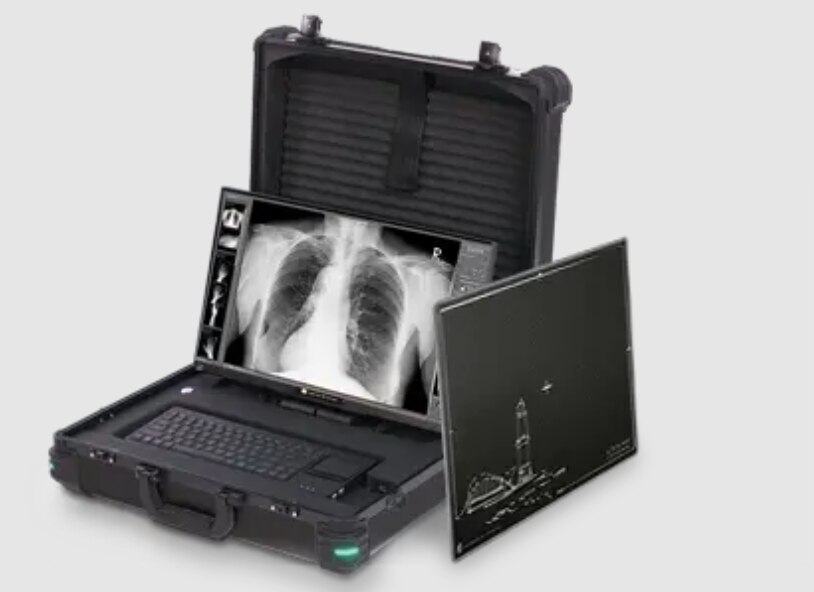
“Portable DR system” can mean a wireless detector used with an existing generator or a complete mobile X-ray unit with its own generator, tube, battery and detector. Clarify this before comparing quotations; a detector-only price is not comparable with a complete mobile system.
| Option | Best fit | Practical trade-off |
|---|---|---|
| DR retrofit system | Fixed room, high daily volume, one dedicated satellite room | Faster repeated positioning and less staff movement; installation can interrupt the room |
| Complete portable DR system | Wards, overflow rooms, camps, home visits and multiple rooms | Equipment travels to the patient; charging, floor space, positioning and radiation-area control become daily tasks |
For a DR retrofit system or portable DR system for diagnostic centres in Nashik, test the operating model rather than the label. A portable DR system suits portable DR system diagnostic centres only when movement creates real value.
- Count daily studies and patient transfers.
- Measure available floor space and count rooms needing examinations.
- Decide whether the existing room must keep operating during installation.
- Compare positioning speed, detector handling and staff travel between rooms.
- Confirm whether controlled exposure procedures are available outside a shielded room.
What does a DR retrofit retain, and what must be checked first?
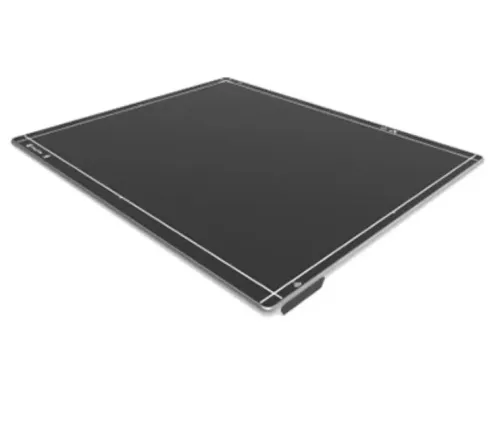
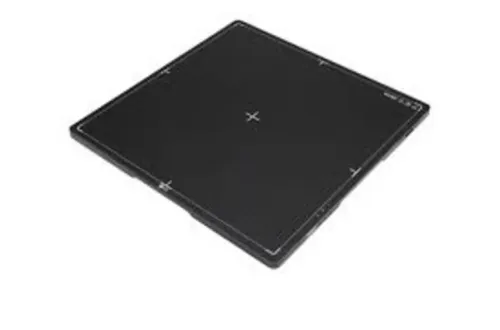
A DR retrofit system in Nashik keeps the existing X-ray generator, tube, tube stand, and table or wall stand. It adds a flat-panel detector, detector interface, acquisition workstation, image-processing software, and DICOM connectivity.
This suits an older room only when the generator can trigger and synchronise with the detector; digital radiography India is not a single compatibility standard.
Check these points before accepting a quotation:
- Generator exposure control, exposure triggering, tube output, kVp range, and mAs range
- Detector format and active imaging area, not just the panel’s outside dimensions
- Cassette tray or bucky dimensions, wall-stand geometry, and source-to-image distance
- Cable or wireless connectivity, electrical supply, and workstation location
- X-ray unit age, service history, maintenance condition, and available acceptance-test records
| Detector format | Suitable use | Critical measurement |
|---|---|---|
| Approximately 35 × 43 cm | General radiography | Active area must cover the existing tray |
| Approximately 43 × 43 cm | Larger wall-stand coverage | Confirm bucky and wall-stand clearance |
| Smaller panel | Extremity or paediatric studies | Check field-of-view limits |
An apparently affordable retrofit can fail if the legacy generator cannot synchronise with the detector. Budget for room modification, installation time, calibration, acceptance testing, and staff training; a successful installation produces correctly triggered exposures, not merely digital images. A supplier must test the actual room and generator before taking an order.
How do portable systems change positioning, charging and staff work?
A complete portable unit changes daily work because it contains its own mobile X-ray generator, tube arm, wheels, battery, exposure controls and detector. A wireless panel alone contains none of these components; it still needs an existing generator and tube stand.
| Option | Room modification and installation | Daily positioning and staff work |
|---|---|---|
| DR retrofit | Little room change; installation and calibration are usually confined to one room. | Faster repeatable positioning in a fixed room, fewer transfers, no detector charging; staff learn the existing generator and new software. |
| Complete portable unit | Minimal fixed-room work, but allow time for assembly, charging points and commissioning. | Moves between rooms, wards and bedside patients; reduces transfers but requires generator positioning, detector handling, radiation-area control and broader staff training. |
| Wireless panel alone | Requires compatible generator triggering, bucky dimensions and wireless network setup. | Flexible positioning, but charging, wireless drop risk and damage become staff responsibilities. |
| Fixed wired detector | Cable routing and room geometry matter during installation. | Reliable power and connection, but less freedom around trolleys and beds. |
For a DR retrofit system or portable DR system for diagnostic centres in Nashik, require the supplier to state:
- Battery capacity, charging time, number of batteries, replacement cost and cycle life.
- Wired fallback, ingress-protection rating, drop-test evidence and detector calibration procedure.
- Loaner-detector arrangements and repair turnaround.
Portable equipment suits examinations across rooms, wards or community locations, but battery depletion, generator output, detector damage and controlled exposure procedures constrain operations. A fixed room and high volume favour retrofit; multiple locations and bedside work favour a complete portable unit. Camp or home-visit services must confirm transport, power and radiation control before purchase.
What workflow and compliance tests should pass before handover?
Before handover, require a witnessed end-to-end acceptance test proving that the system creates usable, traceable studies rather than isolated digital images. A DR retrofit system in Nashik must pass the same workflow test as a complete portable unit.
- Select a patient from DICOM Modality Worklist, acquire and preview an image, repeat an exposure after deliberate positioning failure, then verify patient name, ID, demographics and accession number.
- Send the study to the centre’s PACS or reporting service using the required transfer syntaxes and character sets. Confirm lossless export, audit trails, modality-performed-procedure steps where required and duplicate-study prevention.
- Disconnect the network during transfer, restore it and confirm safe queuing, retry and reconciliation without creating a second study or losing images.
- Print from the actual printer through DICOM Basic Print Management. Test film size, layout, grayscale presentation, printer-status reporting and print-job retry; JPEG export or a screenshot is not DICOM Print Management.
- Record AERB registration or licensing, room shielding, radiation-safety arrangements, acceptance testing and quality-assurance records. Check kVp accuracy, tube output, exposure reproducibility, timer performance, beam alignment, leakage and detector image quality.
Do not approve a “digital radiography India” specification from a conformance logo alone: test the centre’s actual RIS, PACS and printer. Dose depends on technique and exposure-index monitoring, not on the DR label; retain exposure records and investigate repeat images.
How do you calculate an affordable DR system in Nashik?
Compare five-year ownership, not the invoice total. An affordable DR system in Nashik includes every cost that keeps examinations running, while a low quote can become expensive after a detector failure or integration delay.
| Option | Best value when | Main cost risk |
|---|---|---|
| DR retrofit system in Nashik | One stable room, compatible generator and predictable volume | Legacy-generator incompatibility or installation downtime |
| Complete portable DR system | Bedside, multiple rooms, camps or home visits | Batteries, transport, damage and mobile-generator maintenance |
| Wireless detector with existing generator | The room already supports synchronised exposure | Charging, radio faults and detector replacement |
Build the five-year cost from these line items:
- Detector and workstation
- Retrofit interface or mobile generator
- Installation and calibration
- Software licence, DICOM Worklist, PACS or cloud-storage integration
- DICOM-print licensing
- Batteries and backup power
- Warranty, preventive maintenance and detector-damage coverage
- Software upgrades and transport
- Detector replacement and downtime
Require service response time, calibration intervals, a replacement or loaner-detector policy, and the cost of keeping a second room operational during installation. Ask for these figures in writing.
The specification must state studies per day, standing and table examinations, detector size, wireless or tethered operation, generator compatibility, image-processing tools, DICOM workflow, printing, AERB documentation and five-year cost. “Digital radiography India” is not a specification.
Spark Medical Services is worth comparing when it inspects the Nashik installation, tests compatibility, documents commissioning and supports both equipment and workflow. Score clinical fit, interoperability, compliance, service continuity and total cost; then choose the lower-priced quote only if it also wins on value.
Related products
 | Portable DR (Digital Radiography ) System -We Provide sales and service to all types of DR -Our Portable DR System offers a compact, high-performance... View product → |
 | DR System ₹950000 The LUMEN HD Detector by Varex Imaging represents a major advancement in digital radiography technology. View product → |
Frequently asked questions
Which system fits a Nashik diagnostic centre’s operating model?
Choose a DR retrofit system for a fixed room with a sound X-ray generator, tube stand, wall stand or table, predictable study volume and limited equipment movement. Choose a portable DR system when staff need to move between rooms, wards, vehicles or satellite locations.
What does a DR retrofit retain, and what must be checked first?
A retrofit retains usable parts of the existing X-ray room, such as the generator, tube stand, wall stand or table. Before buying, check generator exposure controls, detector dimensions, mounting space, software compatibility, electrical supply, DICOM connectivity and service access.
How do portable DR systems change positioning, charging and staff work?
Portable DR requires staff to carry and position the detector, protect it from drops and contamination, monitor battery charge and transfer images through the acquisition workstation or wireless network. Define a charging point, cleaning process and backup plan before routine use.
What workflow and compliance tests should pass before handover?
Test image transfer to PACS, DICOM worklist and printer output, exposure recognition, detector calibration, rejected-image handling, user permissions and report delivery. Confirm radiation-safety documentation, equipment records, installation checks and staff training before accepting handover.
How do you calculate an affordable DR system in Nashik?
Add the detector, acquisition software, workstation, installation, room modifications, training, warranty, annual maintenance, battery replacement and expected downtime. Compare that total with the cost of keeping the existing room, buying a second detector or moving studies to another facility.
Keywords